Opening New Dialogues with Art From the former GDR
DAS MINSK Kunsthaus in Potsdam
As we mark our 10th anniversary in December 2025, we continue to highlight the people and projects that shape the Foundation’s ecosystem and the ambition that drives them.
Today, we turn to DAS MINSK Kunsthaus in Potsdam, a place for encounters that go beyond art. In 2025, it presented IN DIALOGUE – Hasso Plattner Collection: Art from the GDR curated by Daniel Milnes, a Yorkshire-born art historian whose path to Potsdam began in galleries rather than in language classrooms.
“I was born and raised in Leeds, UK,” he says. “I first engaged with art through my studies in Russian and German literature. That led me to art history, and to curatorial work.”
-

Daniel Milnes, Photo: Clemens Porikys
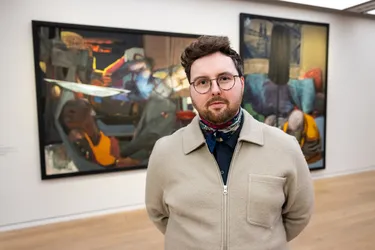
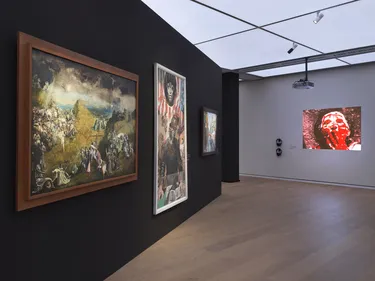
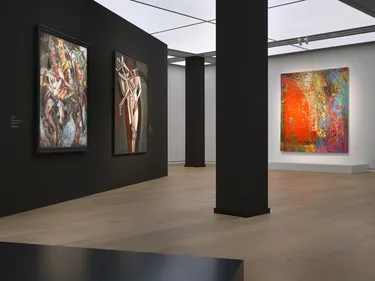
In 2025, Daniel curated the collection presentation IN DIALOGUE – Hasso Plattner Collection: Art from the GDR. It could be seen as a quiet, but determined act of turning a bold idea into action: to bring overlooked works into public view – not in isolation, but in conversation with broader cultural discourses.
“One of the main challenges facing art from the former GDR is visibility,” Daniel explains. “How can art which has been marginalized in the post-1989 context of reunified Germany now receive the recognition it deserves, while also making up for the absence it has endured over the last 35 years?”
For Daniel, this question is deeply personal. His journey through art history has always been driven by a desire to connect places, periods, and people.
“I have always been interested in a broader perspective. I wanted to learn languages, travel, and understand the world. That curiosity drives me to look for meaningful connections between diverse cultures and ask how they can help us understand the past and the present to move forward.”
At DAS MINSK, those connections unfold in real time. The museum’s setting – on a site with layered histories – provides a backdrop for a program that is both regionally rooted and globally relevant. And the artworks Daniel helps to curate are often charged with stories of resistance and complexity.
A case in point: Seher in der Wüste (1978/9) by Gabriele Stötzer. First shown as a loan in the 2023 exhibition Soft Power, the piece has since become part of the Hasso Plattner Collection – a moment Daniel calls “deeply meaningful.”
“Though small in scale, the work carries great energy and importance for Stötzer’s life and work. It is now a pivotal piece in the IN DIALOGUE presentation.”
-

Installation view of the exhibition IN DIALOGUE – Hasso Plattner Collection: Art from the GDR, DAS MINSK Kunsthaus in Potsdam 2025. © VG Bild-Kunst, Bonn 2025; Ursula Mattheuer-Neustädt and Wolfgang Mattheuer Foundation, Leipzig, Photo: Jens Ziehe
-

Installation view of the exhibition IN DIALOGUE – Hasso Plattner Collection: Art from the GDR, DAS MINSK Kunsthaus in Potsdam 2025. © VG Bild-Kunst, Bonn 2025; Courtesy of Núria Quevedo, Photo: Jens Ziehe
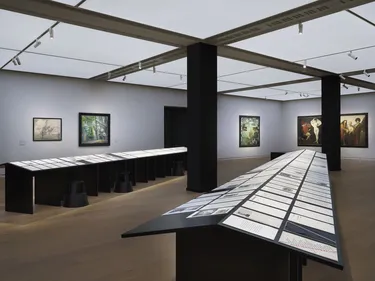
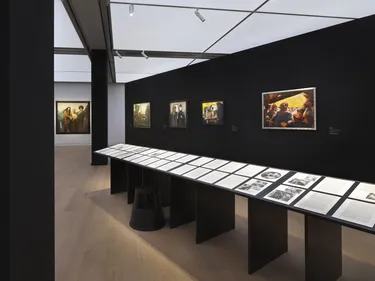
The exhibitions themselves are only one part of the work. Just as important is the platform DAS MINSK creates for ongoing discourse through podcasts, interviews with artists, and open collaboration with other institutions in Germany and abroad.
“The success of the current exhibition – along with the accompanying podcast – has reinforced the importance of actively sharing the visibility that such projects generate.”
It is not always easy. But for Daniel, that only sharpens the focus on values.
“Having a clear understanding of your values is essential. Engaging with larger institutional structures inevitably brings challenges. Navigating these requires a firm commitment to the artists and cultural producers you collaborate with – and a transparent communication of those principles.”
When asked what keeps him grounded amid institutional constraints and artistic debates, his answer is simple: “Art.”
“Working as a curator can demand a great deal of emotional and intellectual energy. But a commitment to art can be unwavering. It is a privilege to engage daily with art, artists, and the ideas they bring into the world.”
-

Installation view of the exhibition IN DIALOGUE – Hasso Plattner Collection: Art from the GDR, DAS MINSK Kunsthaus in Potsdam 2025. © VG Bild-Kunst, Bonn 2025; © Archive »ex.oriente.lux« - Glashaus e.V. Berlin (Claus Löser), Photo: Jens Ziehe
-

Installation view of the exhibition IN DIALOGUE – Hasso Plattner Collection: Art from the GDR, DAS MINSK Kunsthaus in Potsdam 2025. © VG Bild-Kunst, Bonn 2025; Courtesy of Gerhard Richter, Photo: Jens Ziehe
Since its opening in 2022, DAS MINSK has been supported by the Hasso Plattner Foundation, whose commitment for both the historical building and its collection gave the museum a solid basis and an ambitious mandate.
“It’s an honor to work with an exciting and historically important collection, Daniel says, “and to contribute to its growth through rigorous research and an ample exhibition program.”
As the Foundation marks its 10th anniversary in 2025, Daniel hopes that same spirit of curiosity and ethical innovation continues into the next decade.
“At DAS MINSK, I hope we can continue to include more voices in the discussion on the relationship between art and society – from the past into the present and future.”
After all, what is ambition if not the patient pursuit of a broader perspective?
Then to Now: Stories that Shaped Us
For our anniversary, we are sharing stories from across our ecosystem – snapshots of the people and ideas that drive them. New stories will appear on our anniversary page between July and December 2025. We invite you to follow along – and perhaps, find inspiration of your own.