

Art + Culture
The digital future of art history
The Wildenstein Plattner Institute and Navigating.art
The digital future of art history

Viviane Wild. Painting shown: Claude Monet, Villas at Bordighera, 1884. Museum Barberini.
Key Facts
Focus Area
Active since
2016 – Wildenstein Plattner Institute
2024 – Navigating.art
News
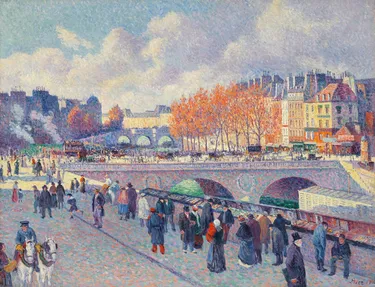
The Wildenstein Plattner Institute, Inc.
The Wildenstein Plattner Institute, Inc. compiles digital catalogues raisonnés, archival material, and related cultural formats that are available to the public online for free. The Institute preserves cultural heritage and promotes scholarly exploration pertaining to its digital holdings.
-

Renoir: Still Lifes as "Pierre-Auguste Renoir: Catalogue Raisonné Project. Edited and compiled by the Wildenstein Plattner Institute, Inc

Navigating.art
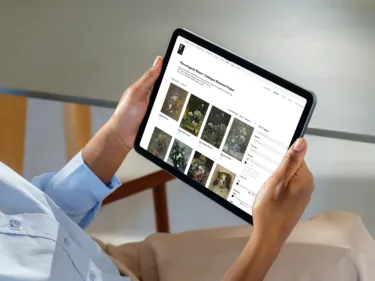
Navigating.art equips cultural institutions with digital tools to create and publish digital catalogues raisonnés for a broad international audience. It offers educational materials for researchers working on digital art history projects, and its team of experts teaches regularly on the digital future of cultural history data.
-

Mikhail Nilov and Hannah Danes: Pierre-Auguste Renoir – Catalogue Raisonné Project
Testimonials
Catalogues raisonnés – indispensable for the digital age
A catalogue raisonné is a compendium of all the works produced by a particular artist. Creating a catalogue raisonné requires years of scientific research, including analysis of primary sources, archives, historical sales records, and published texts. Such a catalog serves as an indispensable resource for the art world and must be updated continuously to reflect emerging scholarship and research findings.
-

Hannah Danes. Gauguin: Catalogue Raisonné of the Paintings. Edited and compiled by the Wildenstein Plattner Institute, Inc.
-

Edme-François Gersaint (1694–1750), Catalogue raisonné de coquilles et autre curiosités naturelles, Paris, 1736.


Digitization Protects Cultural Heritage
Digital catalogues raisonnés facilitate online access to art historical scholarship for researchers and readers across the globe. The WPI has leveraged the flexibility of digital publications and developed a new approach to creating catalogues raisonnés. Navigating.art supports art researchers with educational resources and a platform that enables them to create and publish catalogues raisonnés, archival materials, and other digital publications. Structured and standardized data practices enhance transparency, enabling scholars to trace connections between related artwork and archives.
-

Claude Monet: The Revised Catalogue Raisonné; The Pastels. Edited and compiled by the Wildenstein Plattner Institute, Inc.
-

Hannah Danes. Pierre-Auguste Renoir: Catalogue Raisonné Project
-

Viviane Wild. Painting shown: Claude Monet, Villas at Bordighera, 1884. Museum Barberini


- 3
Looking ahead
WPI’s work includes updating and revising select legacy publications by the Wildenstein Institute, as well as embarking upon new catalogue raisonné projects. WPI’s committees regularly invite submissions of works for consideration.
Following Claude Monet: The Revised Catalogue Raisonné; The Pastels, a second installment entitled Nymphéas will feature Claude Monet’s water lily paintings. The series comprises approximately 300 works and is a culmination of Monet’s lifelong fascination with light and atmosphere. Perhaps more than any other series, the Nymphéas has deeply influenced the public memory of Monet’s impact on Western art.
Navigating.art continues to expand the functionalities of its platform to better serve its users. In 2025 alone, four new catalogues raisonnés will be released using the platform.
-

Claude Monet, Les nymphéas, paysage d’eau, 1906, Oil on canvas, 89.9 × 94.1 cm (35 3/8 × 37 1/16 in.) Art Institute of Chicago, Mr. and Mrs. Martin A. Ryerson Collection, 1933.1157

Milestones
We focus our resources on long-term projects where we believe that we can make a lasting and positive difference. Our aim is to ensure that our philanthropic activities have the greatest possible impact on the people and organizations we work with. This requires time, persistence, and an entrepreneurial mindset.


More Projects in Art + Culture
As part of this focus area, the Foundation supports additional initiatives, including:


Contact
Dr. Julian Fischer
Program Manager Art and Culture