Building Digital Tools for the Future of Health
Data4Life
As we mark our 10th anniversary in December 2025, we continue to highlight the people and projects that shape the Foundation’s ecosystem and the ambition that drives them.
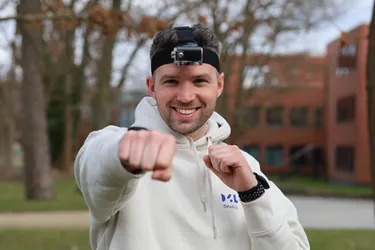
At the Foundation, we are inspired by the people in our ecosystem who turn bold ideas into action. One of them is Tim Walz, who has spent the past five years advancing digital health research at Data4Life. Based in Potsdam and Berlin, Tim has led both strategy and operations – most recently as Project Lead for SensorHub, an initiative that transforms wearable data into real-world health insights.
In May 2025, he begun a new chapter as Chief of Staff at Data4Life Asia, where he will help expand the organization’s reach across borders and time zones, from Germany to Singapore.
Ambition in Action
Tim’s journey at Data4Life is rooted in open innovation and teamwork. His work on SensorHub laid the groundwork for D4L Collect, a digital platform that lets researchers easily integrate data from wearables and mobile sensors into health studies.
The platform is already in use across multiple research projects, offering a scalable way to capture and analyze sensor-based health data. A key milestone: a partnership with Charité – Universitätsmedizin Berlin on the Sensor-S Study, which explores how wearables can support stroke rehabilitation by boosting patient motivation and engagement.

Working Across the Foundation’s Ecosystem
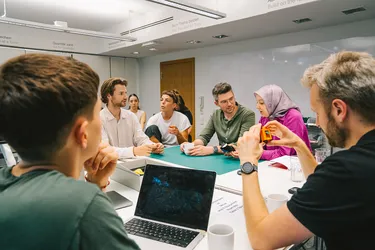
One of the exciting parts of Tim’s work has been the collaboration across the Hasso Plattner Foundation’s network, at the intersection of technology, design, and healthcare. At the Hasso Plattner Institute, Tim worked closely with Prof. Bert Arnrich and researchers Lin Zou, Justin Albert, and Kristina Kirsten, from the Chair of Digital Health – Connected Healthcare. Together, they explored new ways to capture health insights from everyday life, combining academic research with practical application.
At the HPI School of Design Thinking, interdisciplinary teams led by Dr. Claudia Nicolai helped shape user-centered approaches that make digital health tools easier to use and more effective. Tim is convinced that these collaborations make a real difference and ensure that what is built is not just functional – it is human-centered.
Why Open Science Matters
Tim believes that the future of digital health depends on openness and interoperability. With D4L Collect, the goal is clear: give researchers tools they can trust, and data they can build on. Silos have no place in such endeavors. When research is transparent and reproducible, everyone benefits.
By making Data4Life’s tools available to scientists around the world, the platform promotes access to standardized, high-quality, and sharable health data—fueling research that can scale and adapt across borders.
Looking Ahead
As he moved to Singapore to take on a global role, Tim took a bold idea with him: a future where digital health tools work across systems and geographies, offering real-time, personalized insights that help prevent, diagnose, and treat disease more effectively.
His hope for the Foundation’s next decade? That it continues to accelerate the adoption of digital technology in health research and ensures those innovations lead to meaningful, measurable improvements in people’s lives.
Thank you, Tim!
Then to Now: Stories that Shaped Us
For our anniversary, we are sharing stories from across our ecosystem – snapshots of the people and ideas that drive them. New stories will appear on our anniversary page until December 2025. We invite you to follow along – and perhaps, find inspiration of your own.